
Discover Benin → Culture & Heritage
Vodun — arts, culture, spirituality
Benin, the spiritual birthplace of a world religion too often caricatured: its history, pantheon, and how to approach it respectfully.
Benin, the spiritual birthplace of a world religion too often caricatured
In brief
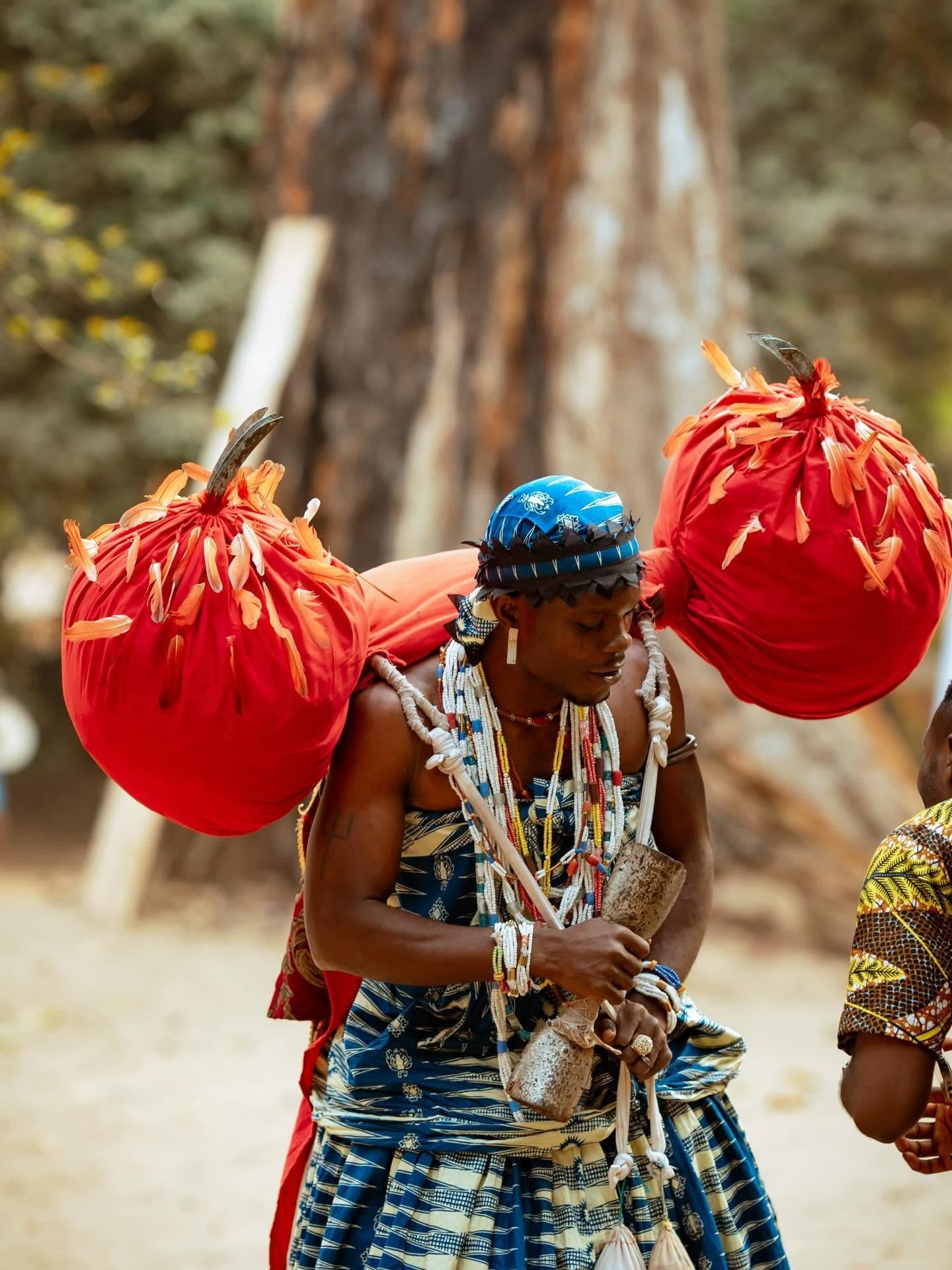
Vodun (often spelled "voodoo" in English, "vaudou" in French) originated in what is now southern Benin, among the Adja-Fon peoples, before spreading across the Americas through the slave trade — giving rise to Haitian Vodou, Brazilian Candomblé, and Cuban Santería. Officially recognized as a full state religion since 1996, Vodun is celebrated every second Friday of January with a national holiday that draws thousands of pilgrims and curious visitors to Ouidah. It's a living pillar of Beninese identity — and a subject that deserves the same rigor and respect afforded to any other major world religion.
Understanding Vodun: far more than clichés
Far from the caricatured images pushed by certain Western films and fiction (dolls, black magic), Vodun is a structured cosmological and philosophical system that organizes far more than a relationship to the divine: traditional justice, medicine, art, community ethics — it functions as a genuine "total social fact" for the Adja-Fon, Ewe, and Yoruba peoples who practice it across Benin, Togo, and southwestern Nigeria.
At the summit of the Vodun pantheon sits Mawu-Lisa, a supreme deity uniting a feminine principle (Mawu, associated with the moon, wisdom, and fertility) and a masculine one (Lisa). From this supreme deity spring numerous secondary vodun, each linked to an element or domain of life: Sakpata (earth and disease), Hêviosso (thunder), Gou (iron and the forge, protector of blacksmiths and warriors), and Mami Wata, the water deity venerated throughout the Gulf of Guinea. Every practitioner is initiated into a vodun of their own, designated by a spiritual leader during a rite of passage, to whom they devote themselves for life.
A national holiday born of a will to reconcile
Vodun's official recognition is recent: it was President Nicéphore Soglo who, in 1993, launched the major "Ouidah 92" festival (the first World Festival of Vodun Arts and Cultures), conceived as a moment of reunion between Benin and its Afro-descendant diaspora, particularly African Americans. In 1996, January 10th was officially established as "National Day of Endogenous Religions" — placing Vodun, for the first time anywhere in the world, on equal institutional footing with Christianity and Islam, the two other major religions practiced in Benin. The holiday is now set on the second Friday of January.
Every year since, Ouidah becomes the stage for striking ceremonies: ritual sacrifices, chants, dances, trances, and offerings to the vodun honored that day. It's also an occasion for many Afro-descendants from the Americas to reconnect with a part of their spiritual heritage that traces directly back to this region of the world.
Vodun in everyday life
Vodun isn't confined to official ceremonies: it runs through the everyday cultural life of southern Benin, through masks (Egungun, Zangbeto the "guardian of the night," Guèlèdè — the latter inscribed on UNESCO's Intangible Cultural Heritage list), family altars, divination practices (Fâ), and a rich ritual craft tradition (statuettes, ceremonial objects, textiles). Our page on the Festival of Masks in Porto-Novo, and our events calendar, go further into these concrete cultural expressions.
How to approach this as a visitor
Vodun is best visited with curiosity, but also with humility: it isn't a show staged for tourists, but a living spiritual practice for millions of Beninese. Favor guides and ceremonies that explicitly welcome visitors, avoid photographing rites and officiants without permission, and approach the subject with the same restraint you would bring to any place of worship anywhere in the world.
Extend the visit
- Ouidah, the spiritual capital of Vodun, especially on the second Friday of January
- The Festival of Masks in Porto-Novo (late July)
- The International Vodun Museum, currently under construction in Porto-Novo
Ready to go?
Plan your trip to Benin
Verified stays, transport, activities, and agencies — everything you need to organize your trip.
Plan Your Trip